

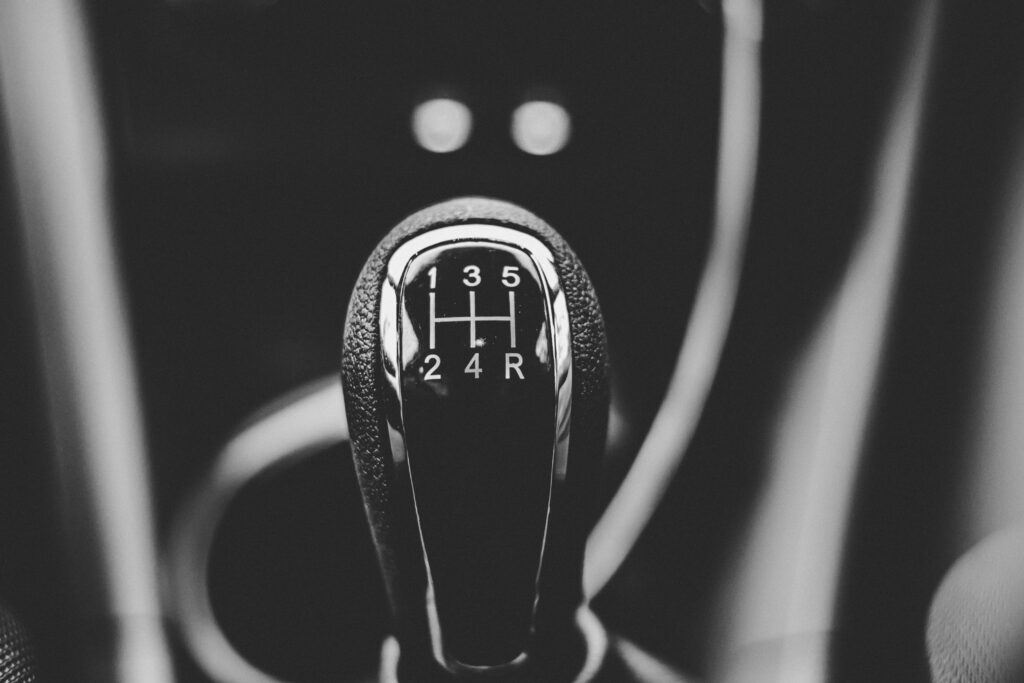
Sometimes after a hard day of solid-liquid separation testing or lithium ion battery recycling, it’s nice to unwind on the winding roads of North Carolina’s Smoky Mountains. And what better way to travel than with a mechanical click of a manual gear shift.
I started driving with a manual gear shift on the column of my roommate’s 1975 Chevy Nova. It had a manual 3-speed transmission on the steering column — lovingly called “three-on-the-tree.” Next came a 4-speed Toyota Corolla with a 1.2-liter, air-cooled engine, and a manual choke. Then, a 5-speed Subaru. In 1982, I moved to a Datsun 200 SX 6-speed sports car.
Of course, I had a long stretch of family sedans and Minivans, with a 6-speed Honda Accord, for good luck. But finally, after 20 years of automatic BMWs, I now have a turbo-charged, 6-speed Volkswagen GTI.
The return to manual transmission isn’t just a nostalgic retreat. This is a high-tech engineering and innovation movement which translates well to the P&ID approach.
Manual Innovation
My blogs regularly talk about innovation (e.g., running shoes, tennis, health care and most recently lithium ion batteries). Here’s why manual transmission cars make the cut.
Early manual cars were hot and heavy. A misplaced shift could blow the engine or burn through the clutch. Mastering it meant you were worthy of bragging-rights for such a glorious machine. Traditional stick shifts faced extinction due to the superior speed of dual-clutch automatics, but now a new wave of mechanical and digital innovation is reinventing what it means to “row your own gears.”
In the United States, manual transmissions account for a mere 2% of new car sales today. Yet, despite the dominance of lightning-fast automatic SUVs and gearless EVs, a dedicated class of enthusiasts is demanding the “analog” experience
High-Wire Driving with Manual Gear Shift
For this vocal minority, the manual gearbox represents the ultimate “high-wire act” of driving. While this resurgence is most visible in the ultra-luxury market, more than I can afford, Subaru reports nearly 80% of BRZ and WRX buyers choose manuals. Mazda sees a 60% take rate for its iconic MX-5 Miata.
For these drivers, it’s about “sensory pleasures”—the vibration of the clutch and the rhythmic satisfaction of a perfect rev-matched downshift. Though, I must admit that in my GTI, there is a bit of delay built into the gear box (Hill Hold Assist) that automatically keeps the brakes engaged for 2–3 seconds to prevent rollback while you shift into first gear. So, the rollback fun has disappeared.
Still, the manual transmission has evolved from a budget-friendly necessity into a premium engineering feature. By integrating aerospace materials and sophisticated software, automakers are proving that the most important innovation is about making the connection between driver and machine more profound. It’s not speed, but the badge of honor and the soul of the journey.
I hope you enjoyed this gear shift back into the past and let’s talk about innovation together.